If you've practiced in home health, ortho, or anywhere you see a lot of patients with arthritis or joint pain, you already know bracing has real benefits, and real challenges when the fit isn’t right. Bracing can reduce pain and improve quality of life as part of a comprehensive therapy plan [1,2], but getting the best fit is critical.
You've probably seen it: a patient orders a brace online or grabs one from the drugstore, and you can tell right away it wasn't made for that particular body. It's too long, too short, or just not proportional.
The rigid parts rub on bony prominences, it doesn't support where it needs to, and the patient calls it uncomfortable. You know where this goes: skin breakdown, a return, or a brace that ends up in the closet.
It's not always a motivation or education problem. Often, fit, comfort, ease of use, and perceived benefit play a bigger role in long-term compliance than a patient's understanding of why they need the brace. The research backs that up.
Brace Fit Is a Design Problem, Not a Patient Problem
Off-the-shelf braces are manufactured in a limited range of standard sizes for a population, not for an individual person. They can work well when a patient's measurements happen to align with that standard sizing, but that alignment is far from guaranteed.
You can adjust straps, add padding, and re-educate on donning technique every visit, and none of it matters if the brace doesn't fit the body.
Some prefabricated braces try to solve this with more straps and adjustments to fit a wider range of bodies. The intent is good, but all the straps, loops, and fasteners can make it confusing for patients to don and doff [3].
Custom bracing is one way to address this. A recent review from the American Academy of Physical Medicine and Rehabilitation points to tailored bracing as an emerging way to address the limits of standard spinal brace design [3]. Medicine is moving toward individualized treatment across many conditions, so it makes sense that bracing would too.
It's a Comfort Problem More Than an Education Problem
We've all had this conversation: you explain the benefits, teach donning and doffing, build a wear schedule, and the patient still stops wearing the brace. It's frustrating after all the time spent on assessment and fitting.
But the patient may be just as frustrated as you are. Fit and comfort, not understanding, are often the real barrier.
A review of lower limb brace compliance found patients ranked comfort, safety, effectiveness, and ease of use as the most important brace characteristics. The same review identified pressure, discomfort, and skin irritation as common reported barriers to use [4]. Proper fit is directly tied to whether a patient keeps wearing the brace at all.
Poor Fit Isn't Just a Comfort Issue, It's a Health Risk
Even after you think you've got a good fit and start increasing wear time, sometimes a visit reveals redness over a bony prominence. Obviously, you take that seriously since repeated pressure can lead to wounds, infection, and functional setbacks.
So you readjust and restart the graded wear schedule. A brace built from the patient's actual measurements can distribute pressure more evenly instead of concentrating force over one bony point. In principle, that should lower the risk of both skin breakdown and discomfort.
The Online Return Cycle
For some patients, ordering online is faster and requires fewer steps than going the custom route. This tends to be true for patients whose body type is close to standard sizing, who need a brace quickly, or who haven't met their deductible and want to avoid the insurance process. For that group, standard bracing can be a reasonable starting point.
But speed up front doesn't always mean a faster path to results. When a brace doesn't fit the first time, patients often cycle through returns and reorders, which is its own source of frustration.
That cycle can delay the point where wear time, symptom relief, and quality of life actually improve. For patients who don't fit standard sizing, or who'd rather skip the trial and error, custom bracing can end up being the quicker route to getting it right the first time.
Out of Pocket vs. Insurance Coverage
There's also a cost question. Patients shouldn't have to pay out of pocket for something insurance may partially cover, especially when they're likely already managing other medical costs. Braces ordered online can sometimes be reimbursed, but usually only through an in-network DME provider, and the patient is often left to navigate that process alone, with a higher risk of denial over documentation or network status.
Working with a DME partner who understands both the insurance requirements and how to get a claim submitted correctly the first time makes that denial less likely. Coverage varies by payer and plan, but many patients who go the online route end up paying fully out of pocket for something that might be partially covered by insurance.
Logistics and Non-Billable Time
Even when custom bracing is clearly the right call clinically, the logistics behind it take a considerable amount of time. Following up on the face-to-face doctor's visit, the order itself, tracking, and delivery all add up.
Much of that is non-billable, which leaves you trying to stay productive without taking time you're not compensated for. Some of it can happen during the session, but that's rarely ideal when your attention should be on the patient and the rest of the treatment plan.
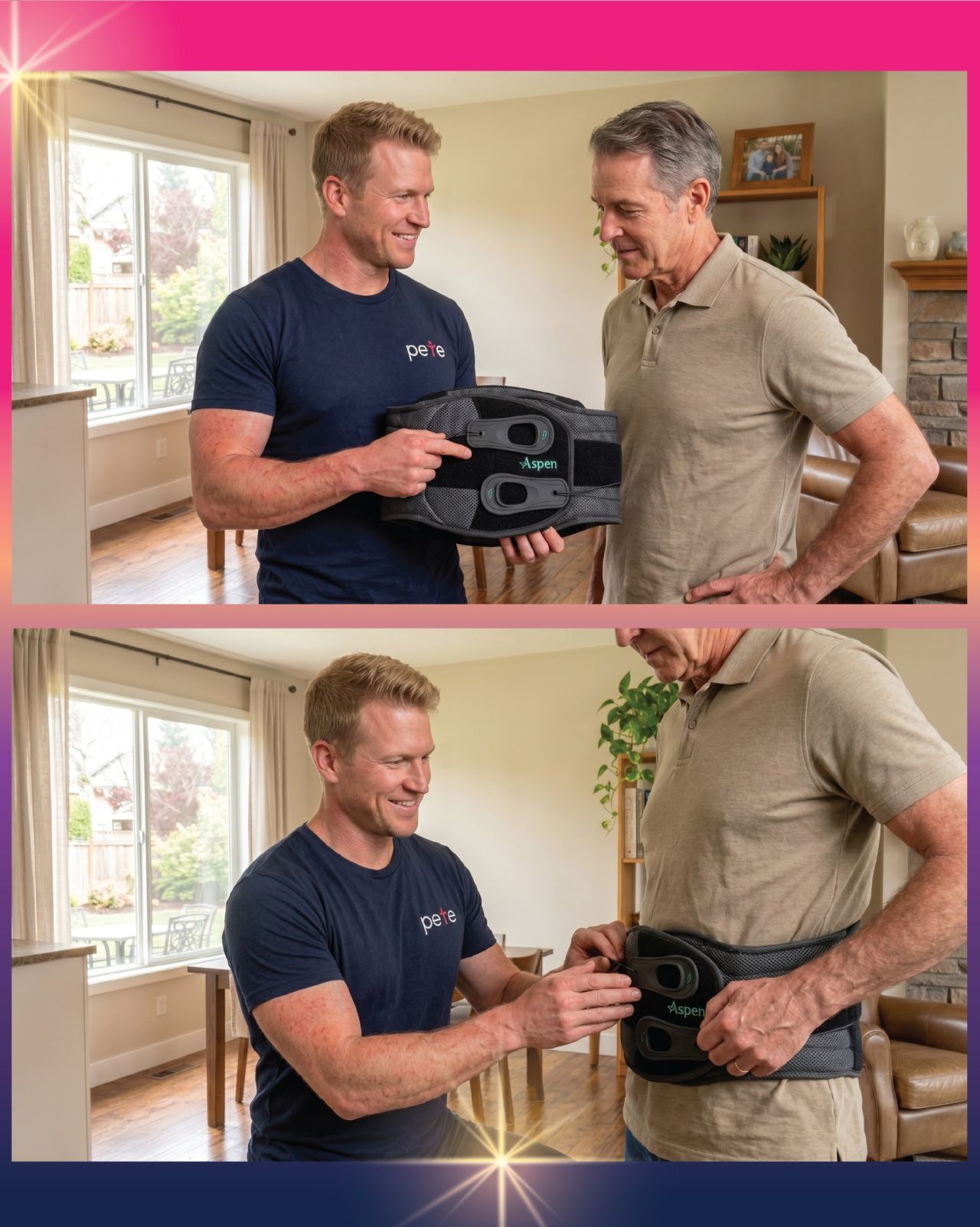
One option is working with a company that already handles custom bracing and the logistics behind it, so that time and attention stay with the patient instead of the paperwork. PeteDME, for example, manages patient consent, doctor's orders, documentation, and the ordering and shipping process from start to finish.
Integrated Musculoskeletal Care
Custom bracing works best as part of the plan of care from the start, not an afterthought added later. Paired with manual therapy and exercise progression, a device built for the patient's actual anatomy supports a genuinely comprehensive approach.
That's the standard worth aiming for. With simplified customization in place and a sound clinical process behind it, better fit, better skin tolerance, and better compliance become outcomes you and your patient can expect, not just outcomes you hope for.
Join PeteDME to simplify custom bracing for your patients.
References
- Akbar, M. S., Syafar, M., Thamrin, Y., Aras, D., Maidin, A., & Arsyad, M. (2025). Impact of lumbar support on pain reduction in low back pain patients: A systematic review and meta-analysis of randomized control trials. Narra Journal, 5(1), e2165. https://doi.org/10.52225/narra.v5i1.2165
- Chen, X., Fan, Y., Tu, H., & Luo, Y. (2025). Clinical efficacy of different therapeutic options for knee osteoarthritis: A network meta-analysis based on randomized clinical trials. PLoS One, 20(6). https://doi.org/10.1371/journal.pone.0324864
- American Academy of Physical Medicine and Rehabilitation, PM&R KnowledgeNow. "Cervical, Thoracic and Lumbosacral Orthoses." Updated 2025. https://now.aapmr.org/cervical-thoracic-and-lumbosacral-orthoses/
- Bashir, A. Z., Dinkel, D. M., Pipinos, I. I., Johanning, J. M., & Myers, S. A. (2022). Patient Compliance With Wearing Lower Limb Assistive Devices: A Scoping Review. Journal of Manipulative and Physiological Therapeutics, 45(2), 114–126. https://doi.org/10.1016/j.jmpt.2022.04.003


Exclusively
by PeteDME
Receive a custom brace at no cost*
Studies show bracing in combination with PT improves outcomes.