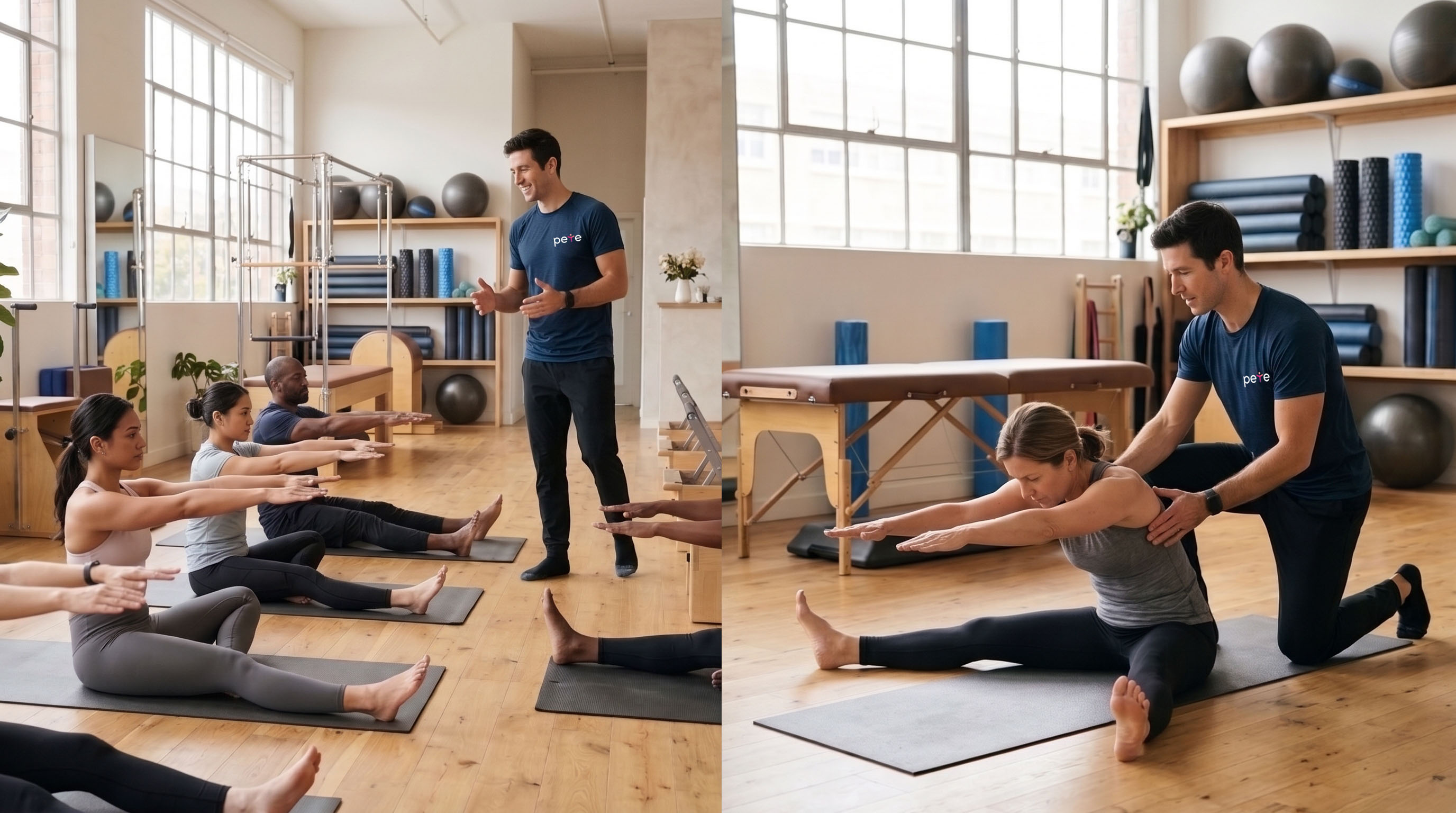
Running a successful Pilates studio involves more than offering great classes. Studio owners are constantly thinking about how to serve their communities, strengthen their businesses, and create meaningful experiences that keep clients engaged.
As the movement and wellness industries continue to evolve, some Pilates studio owners may be interested in exploring partnerships with healthcare professionals.
One opportunity worth considering is a separate physical therapy service pathway.
A physical therapy partnership does not mean turning Pilates classes into medical appointments. Instead, it means exploring whether licensed clinicians could provide distinct clinical services within an appropriately organized studio environment.
For studio owners, the question becomes:
Could a physical therapy partnership complement your existing Pilates business while creating another way to serve your community?
Let's explore what that opportunity could look like.
Looking Beyond Traditional Pilates Studio Services

Pilates studios traditionally focus on movement, strength, flexibility, body awareness, and general physical fitness.
These services remain central to the studio experience.
However, studio owners may encounter clients who are navigating physical limitations, returning to activity after an injury, or seeking professional guidance for movement-related concerns.
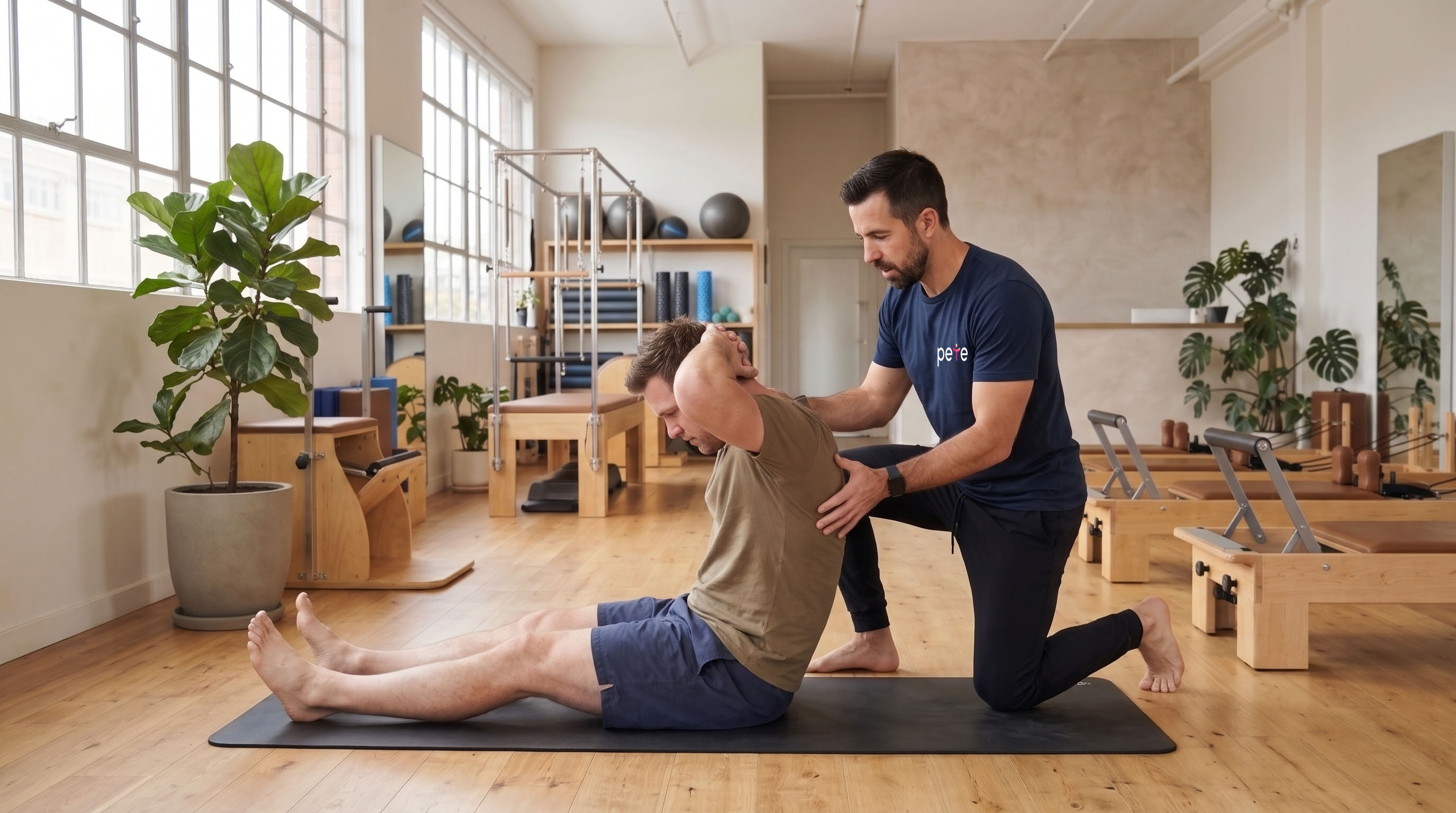
These situations may create opportunities for collaboration with licensed healthcare professionals.
A separate physical therapy pathway could allow a studio to explore an additional service offering without changing the purpose of its existing fitness classes.
For studio owners, this may present opportunities to:
- Explore additional services that complement their existing Pilates programs.
- Build professional relationships with licensed physical therapists.
- Help clients understand when a clinical evaluation may be appropriate.
- Consider new ways to use available studio space.
- Develop a more coordinated movement and healthcare environment.
The goal is not to replace Pilates instruction. It is to explore whether a distinct clinical service could fit alongside it.
Any expansion should be based on actual client needs, operational feasibility, professional requirements, and applicable regulations.
What Could a Physical Therapy Partnership Bring to Your Studio?

Every Pilates studio has different priorities.
Some owners are focused on strengthening their community relationships. Others are exploring service diversification or looking for ways to make better use of their existing facilities.
A thoughtfully structured physical therapy partnership may be worth considering for several reasons.
An Opportunity to Explore Additional Services
A Pilates studio may be able to accommodate separate physical therapy appointments delivered by appropriately licensed professionals.
This could allow the studio to explore a different service category while maintaining its existing Pilates classes.
However, clinical appointments must be organized separately and meet applicable professional, operational, and payer requirements.
Collaboration With Licensed Healthcare Professionals
Working with physical therapists may create opportunities for professional communication and coordination.
Studio owners can continue focusing on their expertise in fitness and movement instruction, while licensed clinicians remain responsible for clinical evaluations, treatment decisions, and patient care.
Clearly defined professional boundaries are essential.
More Ways to Respond to Community Needs
A Pilates studio may already serve people with diverse movement goals.
Some individuals may benefit from a professional physical therapy evaluation, depending on their circumstances.
A partnership could provide a way to explore access to distinct clinical services, where appropriate.
Potential Business Development Opportunities
Service diversification may be attractive to studio owners considering their long-term business strategy.
A physical therapy partnership could introduce new operational or commercial arrangements.
However, financial outcomes are not guaranteed.
Owners should carefully review partnership terms, operating expenses, staffing responsibilities, patient demand, and applicable legal requirements before making a decision.
A successful partnership should make sense for both the people being served and the business operating the space.
Where PeteHealth Fits Into the Partnership
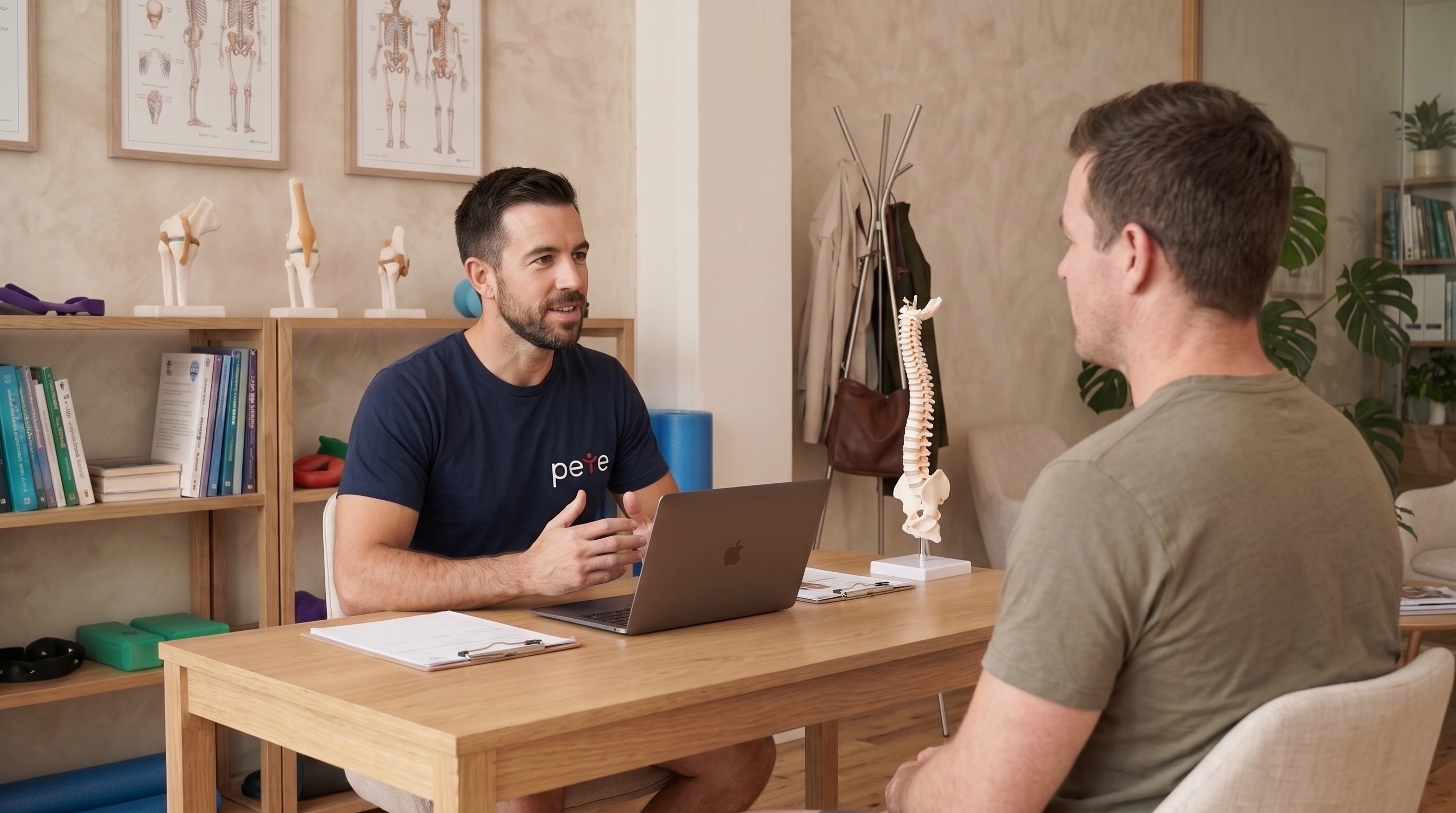
Exploring a healthcare partnership can involve operational processes that are unfamiliar to some Pilates studio owners.
These may include patient intake, appointment coordination, clinical documentation systems, credentialing, benefits verification, and billing workflows.
PeteHealth describes administrative support for qualified partnership arrangements.
Depending on the program structure and agreed responsibilities, studio owners may discuss the following areas with the PeteHealth team.
Partnership Planning
Understanding whether the studio's facilities, business model, and operating arrangements are suitable for a separate physical therapy service.
Patient Intake and Scheduling
Exploring how clinical appointments would be organized separately from regular Pilates classes.
Administrative Coordination
Clarifying which parties would be responsible for documentation systems, credentialing processes, patient communication, and other administrative tasks.
Benefits Verification and Billing Processes
Understanding how insurance eligibility, potential patient costs, and applicable billing requirements would be addressed.
These processes should be reviewed in detail before entering any arrangement.
PeteHealth's administrative role does not replace clinical judgment, professional licensing responsibilities, or payer requirements.
The purpose of the partnership discussion is to understand what support may be available and whether the arrangement fits your studio.
Is Your Pilates Studio Ready for a Healthcare Partnership?

Before exploring a partnership, studio owners should evaluate whether their current environment could support a distinct clinical service.
Consider these four areas.
Studio Space
Is there an appropriate area for private clinical conversations, evaluations, and treatment?
A separate PT service must have an environment suitable for the care being provided.
Scheduling and Operations
How would physical therapy appointments be distinguished from Pilates classes?
Consider booking systems, patient communications, staff responsibilities, and daily studio operations.
Professional Responsibilities
Who would provide clinical services?
Which licensed professionals would evaluate patients, establish treatment plans, supervise care where required, and maintain clinical records?
These responsibilities must be clearly defined.
Financial and Administrative Arrangements
What costs, responsibilities, and commercial terms would apply?
Studio owners should understand any facility-related expenses, administrative arrangements, patient payment processes, and applicable regulatory requirements.
A studio does not need to have every answer before making an inquiry.
However, understanding these considerations can make an initial partnership discussion more productive.
What Could the Partnership Journey Look Like?

For Pilates studio owners interested in exploring PeteHealth, the process could begin with a conversation about their business and goals.
The following is an illustrative exploration process, not a confirmed PeteHealth onboarding sequence.
Step 1 — Explore the Opportunity
Learn about the PeteHealth studio partnership program and consider whether a separate physical therapy service aligns with your studio's goals.
Step 2 — Discuss Your Studio
Share relevant information about your location, facilities, existing services, and operational needs.
Step 3 — Review Potential Requirements
Discuss clinical staffing, professional responsibilities, administrative processes, insurance considerations, and partnership terms.
Step 4 — Evaluate the Fit
Determine whether the proposed arrangement is practical, appropriate, and consistent with applicable requirements.
Step 5 — Consider the Next Steps
If both parties wish to proceed, clarify the formal review, agreements, responsibilities, and implementation requirements.
The actual sequence, eligibility criteria, and available services should be confirmed directly with PeteHealth.
Building a Studio With More Possibilities

Pilates studios play an important role in helping people participate in movement and fitness activities.
Exploring a separate physical therapy partnership does not change that foundation.
Instead, it may create an opportunity to consider additional services, collaborate with licensed clinicians, and respond to community needs through a clearly defined healthcare pathway.
For studio owners, the value of a partnership depends on more than the availability of a clinical service.
It depends on professional collaboration, appropriate processes, operational fit, and clearly understood responsibilities.
Your Pilates studio already creates a space for movement. The next opportunity may begin with exploring how that space could also accommodate a separate pathway to clinical care.
A Practical Next Step
Interested in learning whether a physical therapy partnership could be appropriate for your Pilates studio?
Explore PeteHealth's studio partnership program and start a conversation about your goals, facilities, and potential opportunities.
References and Editorial Notes
Physical Therapy Board of California — Consumer FAQs
https://www.ptbc.ca.gov/consumers/consumer_faq.shtml
Physical Therapy Board of California — Laws and Regulations
https://www.ptbc.ca.gov/publications/law_reference_guide.pdf
American Physical Therapy Association — Professional Resources
U.S. Department of Health and Human Services — HIPAA Information
https://www.hhs.gov/hipaa/index.html
Editorial note: These references provide general professional and regulatory context. PeteHealth-specific administrative services, partnership eligibility, financial arrangements, and onboarding processes require internal confirmation before publication. Potential business benefits are opportunities to evaluate, not guaranteed outcomes.


Exclusively
by PeteDME
Receive a custom brace at no cost*
Studies show bracing in combination with PT improves outcomes.