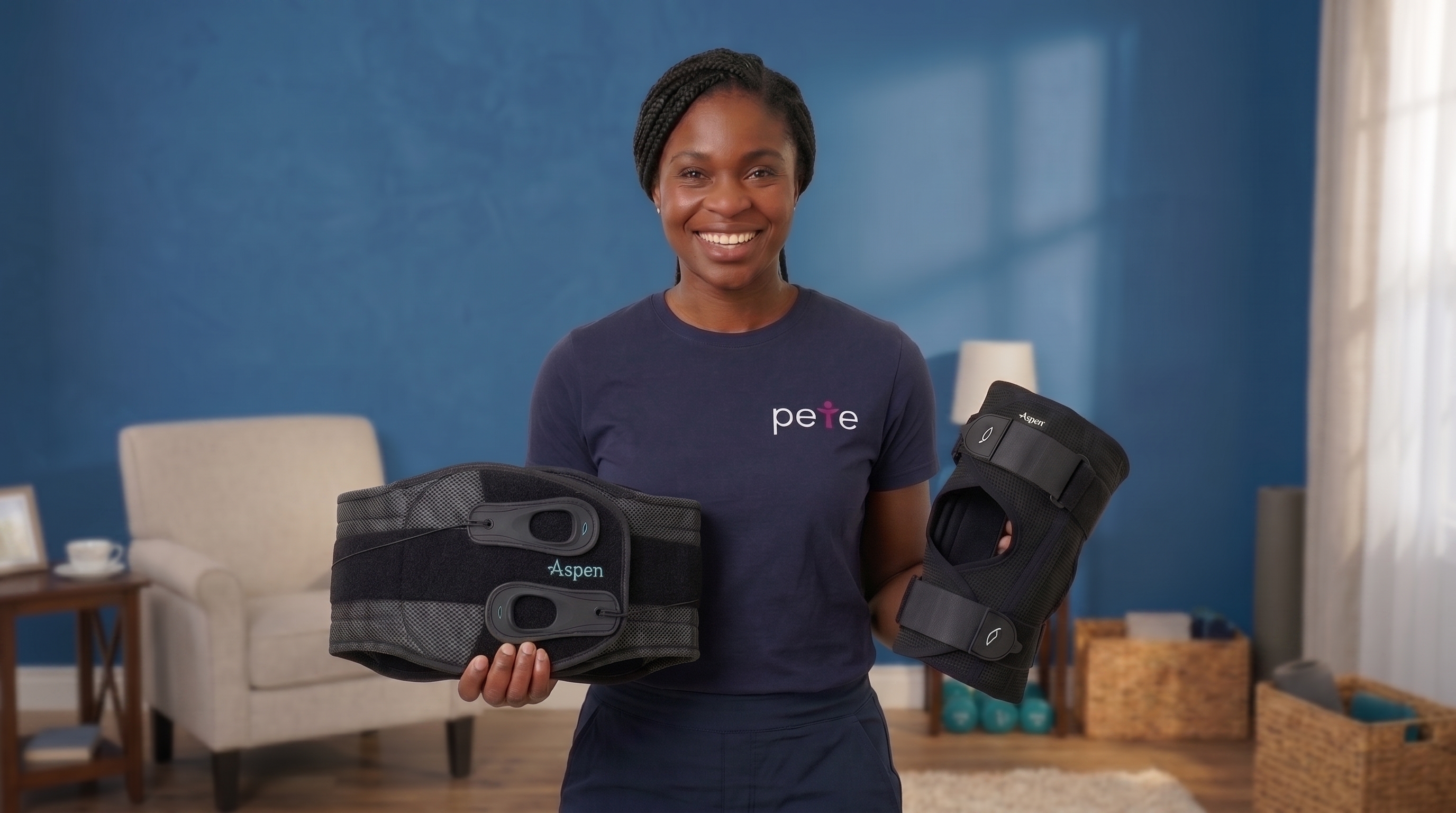
As therapists working in home health through PeteHealth, we have the opportunity to see patients where mobility and daily life takes place, in their homes and communities.
We don’t just assess gait and balance in a clinic hallway or measure strength for a progress note update. We help patients safely navigate stairs, transfer on and off their own couches and toilets, and help them be safer and more independent with ADLs and IADLs.
While we make real progress with skilled therapy, we noticed some patients still have some lingering knee and lumbar instability, and sometimes pain. And it’s not a failure of the therapy. There was just something missing, and it was preventing patients from reaching their maximum potential and goals.
The Gap
Even after patients made excellent progress in therapy, many still needed a little additional support to do the tasks they had to do and the activities they loved.
Then, we saw a clear need for bracing. But, not just any generic bracing.
The Generic Brace
As skilled therapists, we wanted to make sure we were providing the right brace for the right patient alongside our evidence-based interventions. But we kept running into the same problems. Off-the-shelf braces from Amazon or a local drug store fit poorly, and patients stopped wearing them because of discomfort, skin irritation, and pressure issues [1]. Because every patient has different anatomy, bony prominences, and muscle imbalances, one size truly does not fit all. A poorly fitting brace can cause bruising, nerve compression, circulation issues, and pain, and ultimately does more harm than good [2,3,4].
Even a highly rated generic brace becomes a waste of money if the patient cannot comfortably wear it. And to make it worse, many patients were paying out of pocket for those braces when custom bracing could have been at least partially covered by insurance.
The Insurance Maze
Insurance can cover braces for eligible patients, but the process requires documentation of medical necessity, a PCP appointment, determining how much it might cost the patient, and someone to manage the entire ordering and delivery process. We had the clinical knowledge, but simultaneously managing all the insurance steps is cumbersome and easy to lose track of. Without support through the process, some patients simply went without the bracing they actually needed or us therapists ended up wasting too much non-billable time with follow-up calls.
We saw the gap and had strong clinical expertise, so we decided to take action and develop a solution for ourselves, and our patients.
The Custom Bracing Solution & Support
The idea came directly from physical therapists in clinical practice, not from a disconnected DME company. PeteDME was founded alongside patients and PTs by physical therapist, Amy, whose approach was rooted in real-world rehabilitation experience. The goal was never just to get patients a brace. The intention was to create individualized patient solutions that reflected the same patient-centered philosophy we already practice every day.
Our Mission
"To deliver exceptional patient care by combining preventative and responsive treatment with custom-fit bracing tailored to each patient's treatment plan."

Patient-First Therapy and Bracing
As therapists, we know no two patients present the same way. Two patients with identical diagnoses can have completely different movement patterns, pain presentations, muscle imbalances, postural impairments, and functional goals. We individualize treatment plans because rehabilitation is never one size fits all. We believed bracing should follow that same standard.
Custom braces offer patients a better fit, better adherence to their bracing schedule, and ultimately a better value. And because we knew that even a great product fails without a streamlined process, we built one. PeteDME's dedicated support team sets up the face to face with the physician, follows up with patients, handles all the paperwork, and manages delivery logistics once the referral is made.
Built by a PT, for Therapists and Patients
PeteDME exists because therapists saw a gap in care and wanted to build something better for their patients and for each other. We understand that bracing is not a replacement for skilled therapy. Evidence-based interventions, therapeutic exercise, neuromuscular re-education, patient education, and functional training remain the foundation of what we do. But we also know that the right support at the right time, through customized bracing solutions, can make a clinically and functionally significant difference for the patients we serve.
If you are interested in providing your patients who need braces with exceptional care, we would love for you to join our team of dedicated therapists at PeteDME.
Sources:
- Unloader Knee Braces for Osteoarthritis: Do patients actually wear them?
- The Role of Bracing in the Management of Knee Pathology - Part III
- How to Use and Wear a Lower Back Brace?
- Is Your Knee Brace doing more Harm than Good?


Exclusively
by PeteDME
Receive a custom brace at no cost*
Studies show bracing in combination with PT improves outcomes.