No items found.


Exclusively
by PeteDME
Receive a custom brace at no cost*
Studies show bracing in combination with PT improves outcomes.


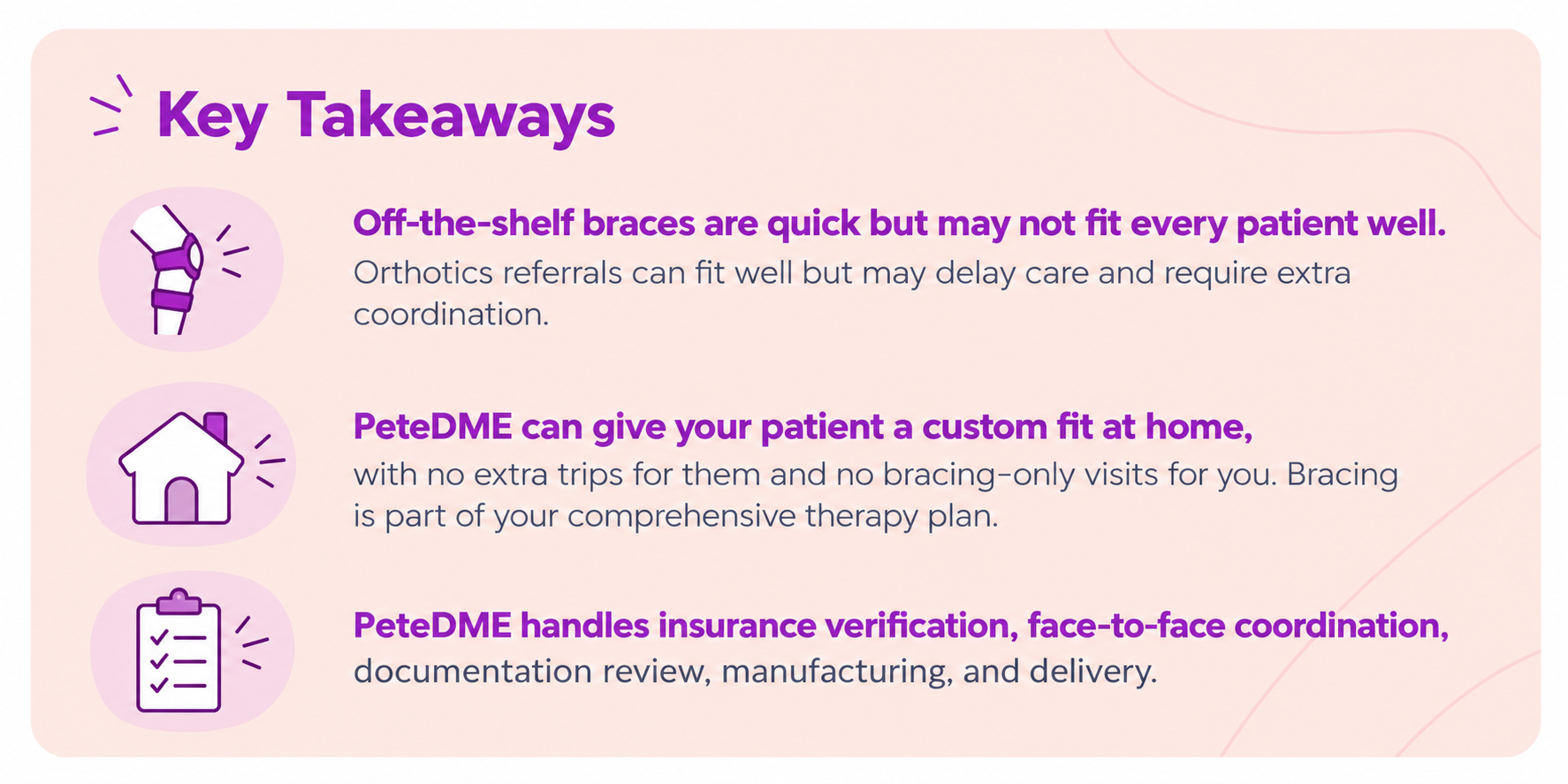
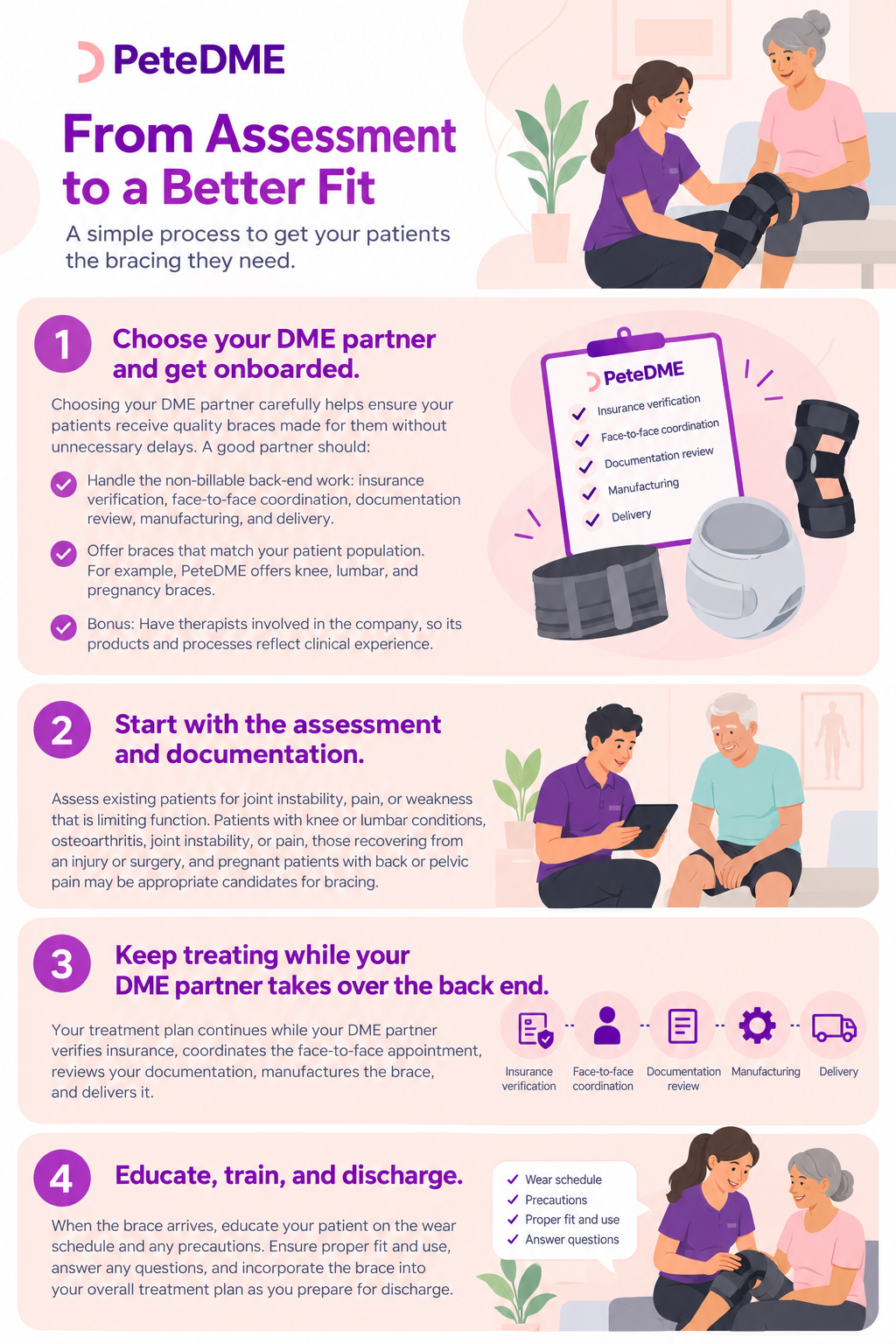
Off-the-shelf braces don’t always fit patients the way you want, and orthotics referrals can take weeks. Here is how a DME partnership lets you provide custom bracing to patients at home in four steps, without adding bracing-only visits.
We’re all familiar with patients getting a brace after surgery or an injury. But bracing as part of a comprehensive plan for chronic conditions is an indication that may get overlooked.
The need is considerable. An estimated 53.2 million U.S. adults have been diagnosed with arthritis [1], and in another study, 28.0% of men and 31.6% of women reported low back pain in the previous three months [2]. Pregnancy brings its own needs: a meta-analysis of 26 studies estimated that about half of pregnant women experience pelvic girdle or low back pain, though estimates vary widely between studies [3].
Not every patient with these conditions needs a brace, and evidence for bracing varies by condition and brace type, so choosing good candidates for bracing is important. When joint instability, anatomical abnormalities, pain, or pregnancy-related changes are barriers to progress, bracing can support your patients alongside your therapeutic exercise, manual techniques, functional training, and patient education.
The harder question is how to get the right brace for each patient that fits and arrives in a timely way.
If you treat patients at home, you’ve probably had to decide how to get a patient a brace. There are two common options, and each has advantages and issues.
Off-the-shelf braces are quick and easy. You can order one online and have it delivered, and it can work well when your patient’s body is close to the size and shape the brace was designed for.
The trouble is that poor fit can mean less support, skin breakdown, and more pain, and it can affect whether patients keep wearing the brace. The process of returning braces purchased online and repeatedly trying different sizes or styles can be frustrating and time-consuming, often delaying the search for the right fit.
For a closer look, read Custom vs. Off-the-Shelf Braces: A PT’s Perspective.
A referral to an orthotics clinic can be appropriate when a patient needs to see a specialist. A custom brace typically results in better fit, comfort, and adherence to wear schedules.
Access and timing can be challenges, though. Many patients receive therapy at home due to challenges with mobility, driving, or both. The time from referral to final fitting may delay care and extend your episode of care. Follow-up is also split between you and the clinic, which often means extra non-billable time for coordination.
You can also provide custom braces to your patients as a therapist in home health and mobile outpatient settings by establishing a partnership with a company that provides custom braces. That can mean a custom fit with less waiting, and your patient never has to travel.
With a DME partnership, you stay focused on your patient while the DME company handles insurance verification, face-to-face coordination, documentation review, manufacturing, and delivery. That can reduce your non-billable time and make the process more efficient for you and your patient.
Bracing is part of your comprehensive therapy plan, not a separate one. There are no bracing-only visits and no separate treatment plan. Assessment, fitting, and education happen within the visits you are already making.
Curious about the model behind PeteDME? Read Built by a PT: The Story Behind PeteDME.
There is considerable opportunity to improve patient outcomes with custom bracing for appropriate candidates. DME partnerships designed specifically to support therapists in mobile outpatient and home health practices can minimize the barriers to getting patients braces at home by handling the non-billable logistics, so you can keep your focus on your patient and your plan of care.
Receive a custom brace at no cost*
Studies show bracing in combination with PT improves outcomes.