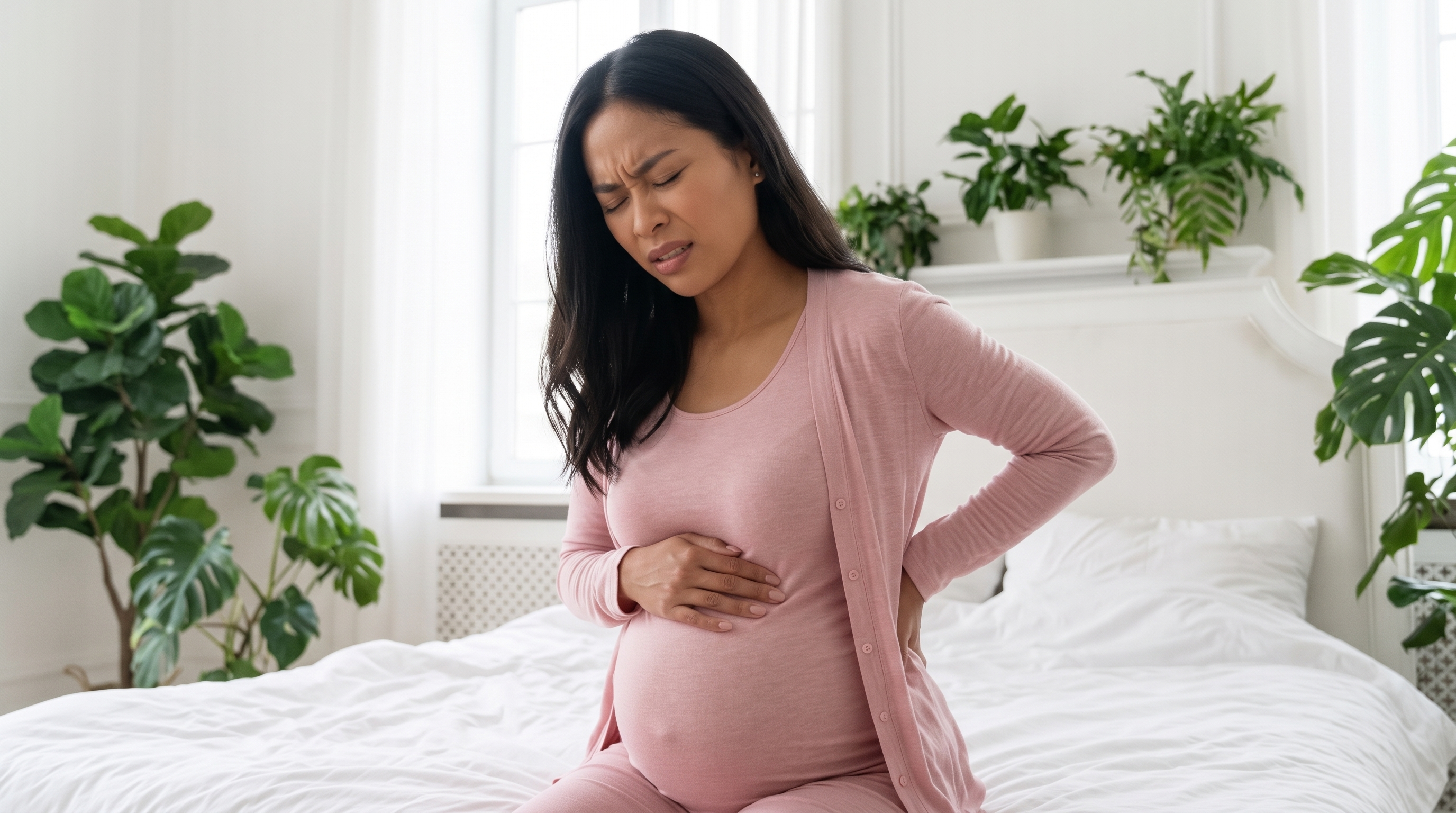
Pregnancy changes the body in remarkable ways. Some of those changes can also make everyday activities—walking, standing, sleeping, getting out of a car, or simply turning in bed—more uncomfortable than they used to be.
Low-back and pelvic-region pain are common concerns during pregnancy, especially as pregnancy progresses.
The good news is that “common” does not mean “something you simply have to tolerate.”
Understanding why symptoms occur, recognizing when it is time to speak with a healthcare professional, and learning about appropriate movement, rehabilitation, and support options can help you make more informed decisions throughout pregnancy.
Why Can Pregnancy Affect the Back and Pelvis?
As pregnancy progresses, the body continually adapts.
The growing uterus shifts the body's center of gravity forward, while the abdominal muscles stretch to accommodate the pregnancy. These changes can affect posture and increase the demands placed on the muscles and joints of the lower back and pelvis.
Pregnancy-related hormonal changes can also affect the ligaments that support the joints.
According to the American College of Obstetricians and Gynecologists (ACOG), these changes—including a shifting center of gravity, stretching abdominal muscles, additional weight, and changes in joint flexibility—are among the reasons back pain is so common during pregnancy.
That can make activities that once felt routine—such as standing for long periods, walking, lifting, exercising, or changing positions—feel different as pregnancy progresses.
Low-Back Pain and Pelvic Girdle Pain Are Not Always the Same

People often use “back pain” as a catch-all phrase, but discomfort during pregnancy can come from different areas and may have different causes.
Low-back pain is generally experienced around the lumbar region of the spine.
Pregnancy-related pelvic girdle pain (PGP) involves pain around the pelvic region. It may be felt toward the front or back of the pelvis and can interfere with everyday movements.
Activities such as walking, climbing stairs, standing on one leg, getting in and out of a car, or turning over in bed may become uncomfortable for some people experiencing pelvic girdle pain.
Research suggests that pregnancy-related pelvic girdle pain is multifactorial, meaning that both hormonal and biomechanical changes may contribute.
Because low-back pain and pelvic girdle pain can overlap—and because pain during pregnancy can sometimes have causes unrelated to the muscles and joints—self-diagnosis is not ideal.
A qualified healthcare professional can help determine what may be contributing to the symptoms and whether additional evaluation is needed.
What May Help?
There is no single solution that is right for every pregnancy.
Care should be individualized and coordinated with your obstetric healthcare team.
Depending on your symptoms, health, stage of pregnancy, and clinical evaluation, recommendations may include:
- Adjusting posture and everyday activities
- Appropriate physical activity and exercise
- Physical therapy
- Supportive footwear
- Using heat or cold for sore muscles when appropriate
- Modifying activities that aggravate symptoms
- Using an abdominal or pelvic support garment or brace when appropriate
For most people with uncomplicated pregnancies, physical activity can remain an important part of maintaining health.
ACOG recommends discussing exercise with your obstetric provider and notes that physical activity during pregnancy can help reduce back pain. Exercises that strengthen and stretch the muscles supporting the back and legs may also be helpful when appropriate.
What Does Recent Research Say About Exercise?
Research into pregnancy-related pelvic girdle pain continues to evolve. A 2026 systematic review and meta-analysis published in The Journal of Pain examined 11 randomized controlled trials involving 810 participants. The researchers found moderate-certainty evidence that exercise interventions reduced pain and improved function among people experiencing pregnancy-related pelvic girdle pain. The review found promising results associated with supervised abdominopelvic core exercise. However, the researchers also emphasized that findings regarding the exact exercise frequency, duration, and intensity were based on limited data and should be considered preliminary. In other words, the evidence supports exercise as an important option—but that does not mean one exercise program is right for everyone. Pregnancy, symptoms, fitness levels, and individual needs differ.
That is why working with an obstetric provider, physical therapist, or other qualified healthcare professional can be valuable when deciding what type of movement or exercise is appropriate for you.
Where Can Extra Support Fit?
Movement, exercise, and physical therapy may be important parts of managing pregnancy-related back or pelvic discomfort. But sometimes, a little extra support may also be helpful.
An Extra Support Option: Popple LSO

For someone who needs more structured maternity support, one option to discuss with a healthcare professional is the Popple LSO (Lumbar Sacral Orthosis).
Popple is a maternity-specific lower-spine brace from Aspen Medical Products.
According to Aspen, Popple was developed by OB/GYNs and spine physicians specifically as a maternity lower-spine brace.
Its design combines a lifting action intended to support the abdomen with compression around the lower spine, providing a different approach from a simple elastic maternity support belt.
The Popple LSO is designed with features that include:
- Abdominal Support - The brace uses a lifting action designed to help support the growing abdomen.
- Lower-Spine Support - Its design also provides compression around the lower spine for additional support.
- Adjustable Support - The brace can be adjusted, allowing the fit and level of support to accommodate the individual's needs.
Pregnancy-Specific Design
Rather than being a general-purpose back brace, Popple was developed specifically with maternity-related musculoskeletal needs in mind. These are product design features described by the manufacturer and should not be interpreted as a guarantee that the brace will relieve pain or be appropriate for every pregnancy.
A brace may be useful for some people and unnecessary for others.
That's why the decision to use Popple—or any maternity support device—should begin with the person and their symptoms, not the product.
If pregnancy-related back or pelvic discomfort is making walking, standing, working, exercising, sleeping, or other everyday activities increasingly difficult, consider discussing those symptoms with your obstetric provider or physical therapist.
They can help determine whether exercise, physical therapy, activity modification, external support—or a combination of approaches—may be appropriate.
Need a Little Extra Support?
If your healthcare professional determines that additional maternity support may be appropriate, Popple LSO is one option you can ask about.
Learn more about Popple and maternity support available through PeteDME.
The Goal: Keep Care Individualized
Pregnancy-related discomfort deserves thoughtful, individualized care. For one person, changing certain activities and following an appropriate exercise program may be enough. Another person may benefit from working with a physical therapist. Someone else may find that an external support device is useful as part of a broader plan. And for certain individuals, a more structured maternity support option such as Popple may be something worth discussing with their healthcare professional. There is no single answer that applies to every pregnancy. The right next step starts with understanding the symptoms and the person—not simply choosing a product.
Reader Takeaway
Back and pelvic pain during pregnancy are common, but they are not all the same. Understanding what may be contributing to your symptoms is an important first step. Appropriate movement, exercise, physical therapy, activity modification, and—in selected cases—external support can all be considered as part of an individualized care plan.
If additional support is appropriate, maternity-specific devices such as Popple LSO provide another option to discuss with your healthcare professional. You don't have to simply assume that discomfort is something you must tolerate. Start the conversation with your
healthcare team and find the support that's appropriate for you.
Medical Disclaimer
This article is for general educational purposes only and is not intended to provide medical advice, diagnosis, or treatment. Pregnancy symptoms and the use of any support device should be discussed with an obstetric or other qualified healthcare professional. Seek prompt medical care for severe, persistent, or concerning symptoms.
Evidence & References
1. American College of Obstetricians and Gynecologists (ACOG).
Back Pain During Pregnancy. Published May 2020; last reviewed October 2025.
https://www.acog.org/womens-health/faqs/back-pain-during-pregnancy
2. American College of Obstetricians and Gynecologists (ACOG).
Exercise During Pregnancy.
https://www.acog.org/womens-health/faqs/exercise-during-pregnancy
3. World Health Organization (WHO).
WHO Recommendations on Maternal Health, Second Edition. 2025.
https://www.ncbi.nlm.nih.gov/books/NBK615641/table/part1.tab27/
4. Lu X, Zhou D, Shi J, et al.
Exploring exercise prescription parameters for pregnancy-related pelvic girdle pain: A systematic review and meta-analysis
of effects on pain and function. The Journal of Pain. 2026;47:106401.
https://pubmed.ncbi.nlm.nih.gov/42551620/
5. Sward L, Manning N, Murchison AB, et al.
Pelvic Girdle Pain in Pregnancy: A Review. Obstetrical & Gynecological Survey. 2023;78(6):349–357.
https://pubmed.ncbi.nlm.nih.gov/37322996/
6. Aspen Medical Products.
Popple™ 631 LSO — Product Information.
https://www.aspenmp.com/products/popple-631-lso


Exclusively
by PeteDME
Receive a custom brace at no cost*
Studies show bracing in combination with PT improves outcomes.